Photographing media – Analogue to AI and Back Again
Jon Carapiet’s work sits firmly within the tradition of artistic appropriation that addresses fundamental issues facing photography in the early 21st century: namely, the erosion of the medium’s historical authority, the saturation of mass media imagery, and the challenge of discerning “truth” in an age of rampant digital reproduction and AI. Like his predecessors, Carapiet leverages the power of found imagery to critique the mechanisms of media consumption, but he has specifically focused on the evolving sources of those images—moving from print to TV to artificial intelligence.
The critical lineage connecting his work to artists like Richard Prince, Andy Warhol, and Barbara Kruger is evident in his core methodology. Andy Warhol famously reproduced iconic celebrity images, collapsing the distinction between high art and commodity culture through the silkscreen process. Barbara Kruger’s work appropriated existing advertisements and images, overlaying them with bold text to disrupt the viewer’s passive consumption of media messages. Richard Prince re-photographed corporate advertisements, most famously the Marlboro Man, presenting the images as his own to critique the construction of identity and fiction in advertising.
Carapiet’s artistic progression can be mapped through a series of installations that mirror these approaches, evolving alongside the very media technologies he critiques. He moves from traditional analogue methods of capturing existing media to integrating the latest, most disruptive technology: artificial intelligence. He maintains a critical stance throughout, challenging the viewer to question the veracity and ethical implications of the images we consume daily.
Headlines (1994)
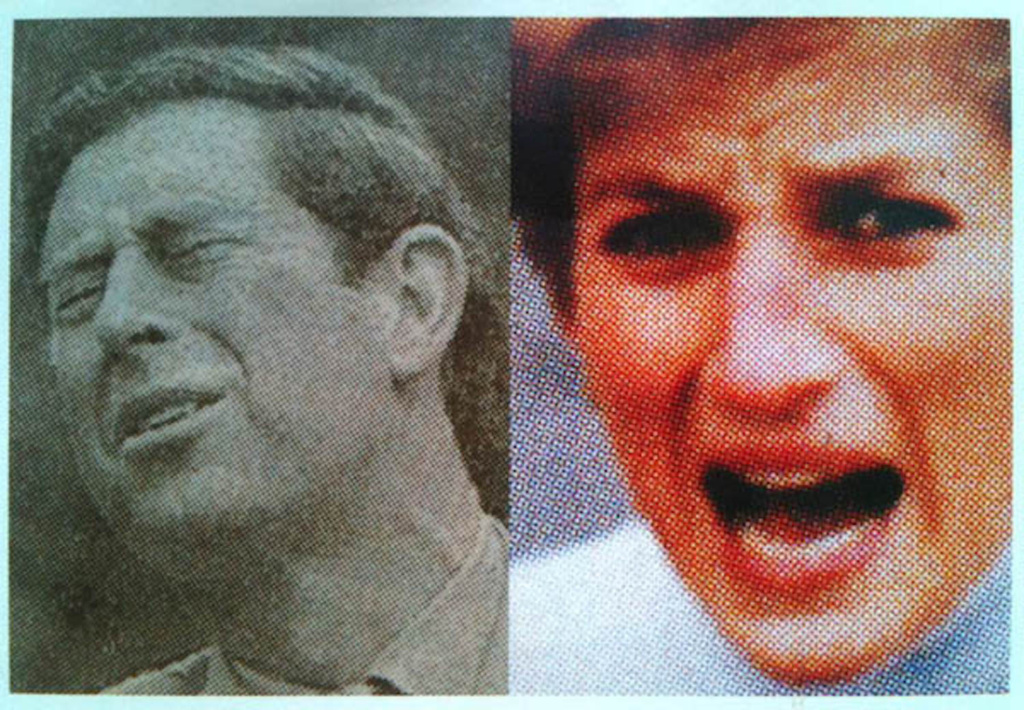
Headlines marked Carapiet’s initial foray into the critical appropriation of mass media imagery, setting the stage for his decades-long inquiry into the nature of photographic truth. This installation, exhibited in 1994, included images of the British Royal Family, specifically Princess Diana and Prince Charles, sourced directly from tabloid newspapers. The choice of subject was strategic, focusing on figures who were, at the time, at the absolute zenith of global media saturation and public scrutiny. By photographing these ephemeral, low-quality, newsprint images and re-presenting them within a gallery context, Carapiet performed an act of artistic judo. He elevated the mundane and disposable into the realm of high art while simultaneously deconstructing the media’s voracious, almost predatory, consumption of celebrity life. This work can be positioned as a direct conversation with Warhol’s celebrity portraits, but it adds a layer of timeliness and political critique, questioning the ethics of ‘the media’ that dictates public perception and defines reality. The installation speaks to the notion of the ‘phantasmagoria’ described by Susan Buck-Morss. She draws on Walter Benjamin, and argues in Aesthetics and Anaesthetics that modern technologies and mass culture (malls, arcades, media) create illusions that dull human perception (anaesthetics) while promoting, in her words, a phantasmagoria of the “new nature”.
The approach in Headlines prefigures Carapiet’s later work that selects (edits) and magnifies “found moments” of media entertainment and global politics, highlighting the sensationalism that would define much of the media landscape (and the consumer/viewer experience) in coming decades.
Duplicities (Photoforum publication, 1995)
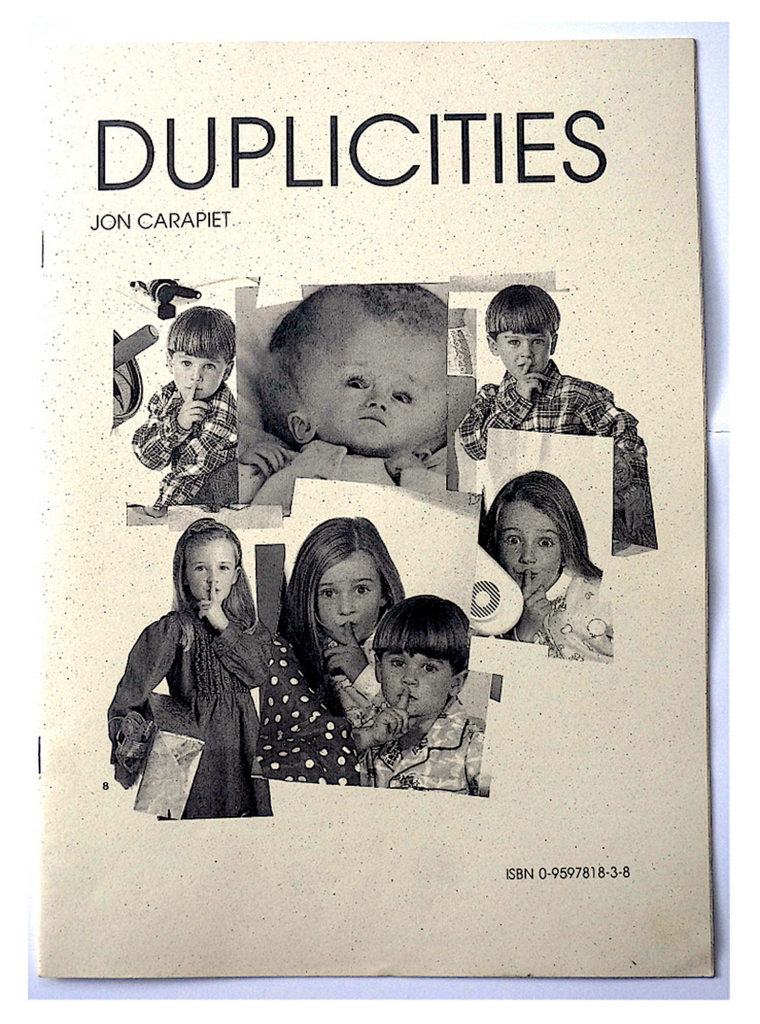
The progression to Duplicities saw Carapiet deepening his exploration of photography’s role in constructing reality, this time using collage of ephemeral daily newsprint for an exhibition and in a more formal, academic context as a Photoforum publication. This work delved into Walter Benjamin’s analysis of art in the age of infinite reproducibility, a topic that gains new urgency with digital media and becomes a focus of Carapiet’s later work. Duplicities explored the potential of collage to uncover the ambiguity of media photography as the “uncertain holder of truth” and the title points to an underbelly. The project involved a simple layering of one or two images to structure a concept. Collages of duplicate images create a time-sequence of movement that echoes the mechanical process, Originality and authenticity become slippery concepts. The title itself suggests a double-dealing media that promises truth but delivers a manipulated version of reality. In Carapiet’s oeuvre, this represents a shift from focusing on the subject of the media to the mechanisms of the medium itself, challenging the viewer’s trust in the image as a reliable document of reality.
_istory (1995) exhibited rephotographed images of woman and children from 50 years of war.
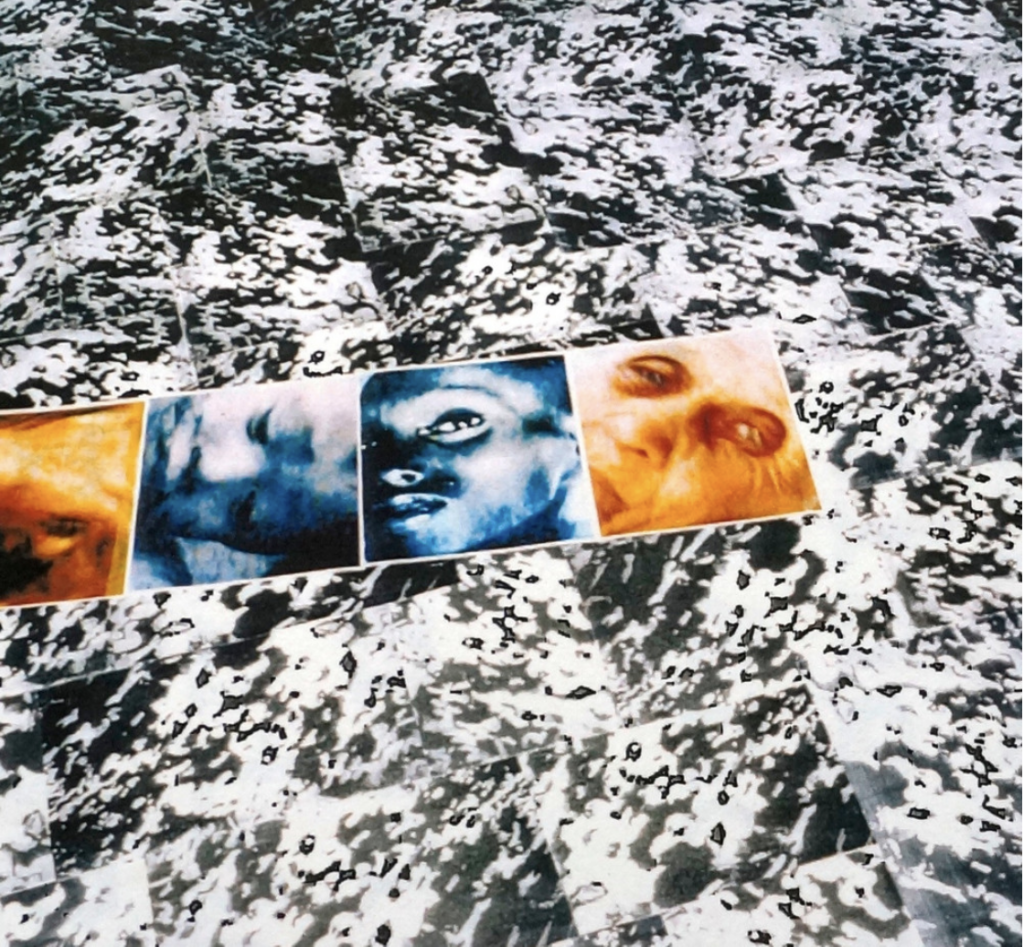
The installation had these presented on the gallery floor as a snaking line which positioned the viewer’s gaze to reconsider decades of media coverage of war.
Other of Carapiet’s projects have centered on photographing objects in the real world, with portraits of the human face being a consistent theme.
Stomp (2016)
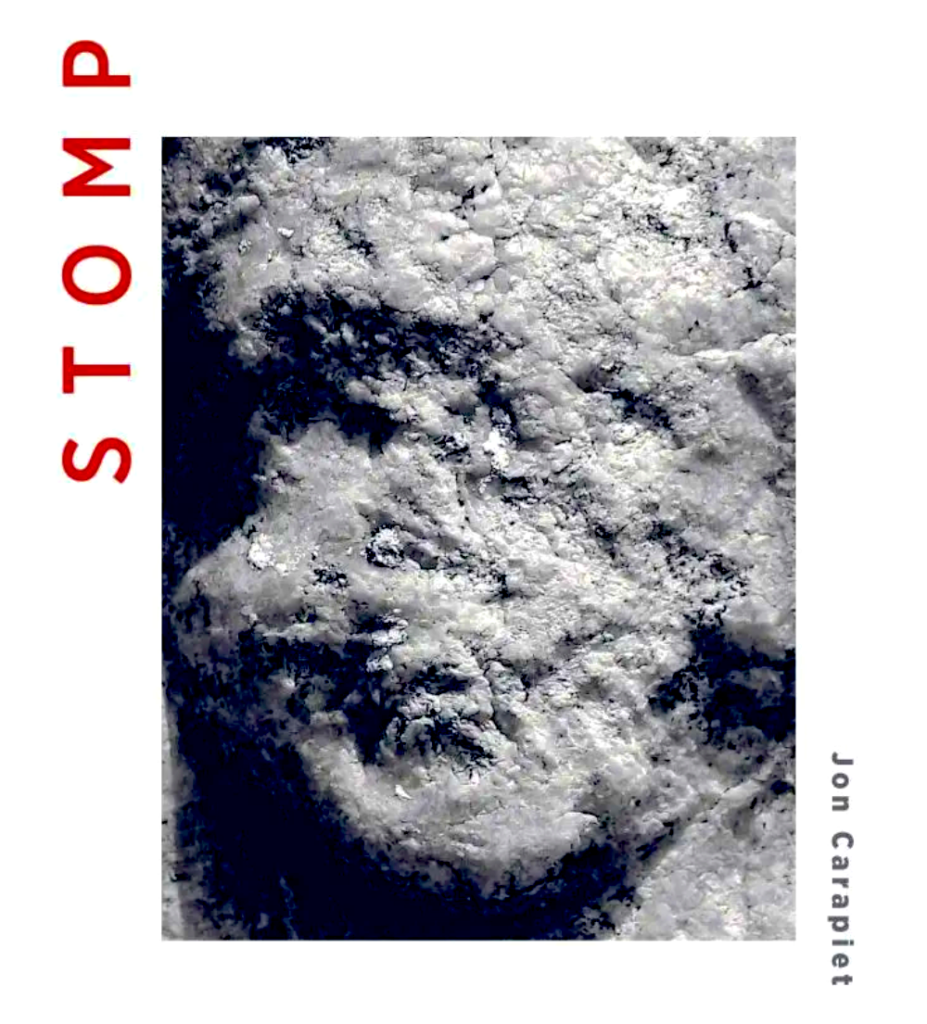
The installation of photographs of broken statues in Stomp used them as portraits of cultural disintegration and a contemplation on Time. The work was exhibited at Photospace Gallery and published as an artist’s book.
Almost as a counter-response and antidote to the onslaught of media, Guardians (2018) sought to capture the numinous.
Moving far away from the theme of technology, Guardians is Carapiet’s attempt to reconnect with the spiritual and magical powers associated with photography since its beginning.
Rain Fade ( 2019)
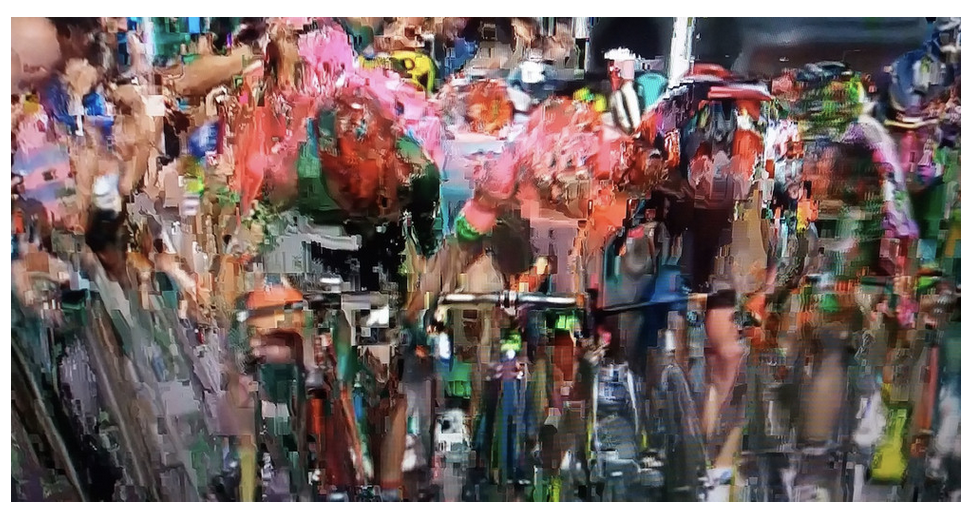
With the installation Rain Fade, Carapiet moved from rephotographing print media to capturing transient, disrupted images from broadcast television. This shift reflects a natural progression in media consumption from the 1990s to the late 2010s. This project involved ‘performative’ documentary photography – literally photographing the TV screen for glitch “found moments” that act together to repeatedly represent the threat of climate instability. The show title refers to the on-screen message during disruption of the TV satellite signal. The photos are a physical manifestation of the fragility of the communication systems we rely upon. By capturing these images of disruptive climate events and presenting them as still photographs, Carapiet challenged Henri Cartier-Bresson’s concept of the “decisive moment”. Instead of a perfect, decisive capture of reality, the images become “indecisive,” grainy, repetitive and uncertain, mirroring the ambiguity, denial and urgency surrounding climate change. The degradation of the image in the broadcast signal serves as a powerful metaphor for the degradation of the environment itself, positioning the viewer as a critical observer of an unfolding global crisis reported through the media.
Legacy (The Greats) (RIM Books Publication, 2024/2025)
A recent iteration of Carapiet’s critique of media and technology is the Legacy project, featured in a RIM Books publication and exhibited in 2024/2025.
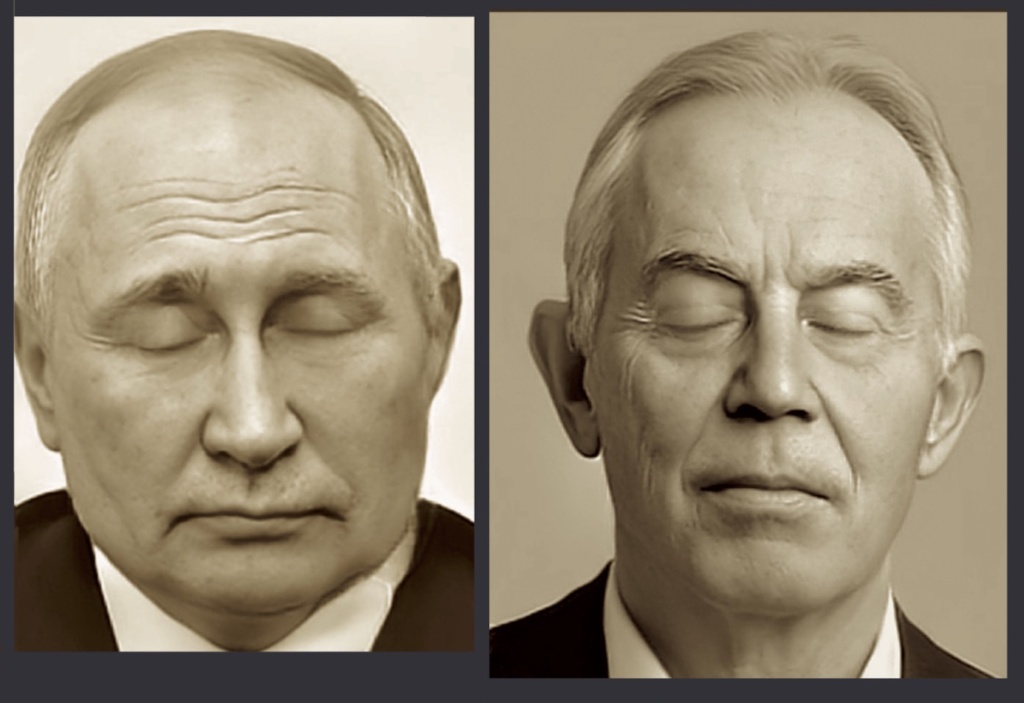
This project represents a significant leap into the ethical quagmire of artificial intelligence. Carapiet uses AI to “reanimate” portraits of living, highly recognizable figures like Elon Musk and Bill Gates, who are themselves architects of our technological age. By presenting them with their eyes closed, he explores photography’s historical link with death and memory, while forcing the viewer to confront the profound challenge of distinguishing “real” from “fake” in the age of generative AI. The AI software, designed to animate images of the deceased, is subverted here to de-animate the living for closer scrutiny. They are nostalgic predictions, showing iconic figures as unconscious, introspective, memento mori. This installation directly addresses the contemporary issues facing photography. When anyone can create a convincing “photograph” of anything or anyone using AI, what is the overall impact on our relationship with the photographic image? Carapiet is critiquing the technological onslaught even as he employs its tools to subvert, holding a compelling and complex position as an artist. He suggests 2023 as a moment in time that AI photography fully emerged to mark the death of photography as we know it.
If there is a single image to embody the notion of the death of photography, it is Carapiet’s 2025 project Peace Mona Lisa.
This new take on Leonardo da Vinci’s masterpiece is a unique archival photograph printed from a medium format negative which is embedded in the rear of the picture frame. The unique print and original negative go together.
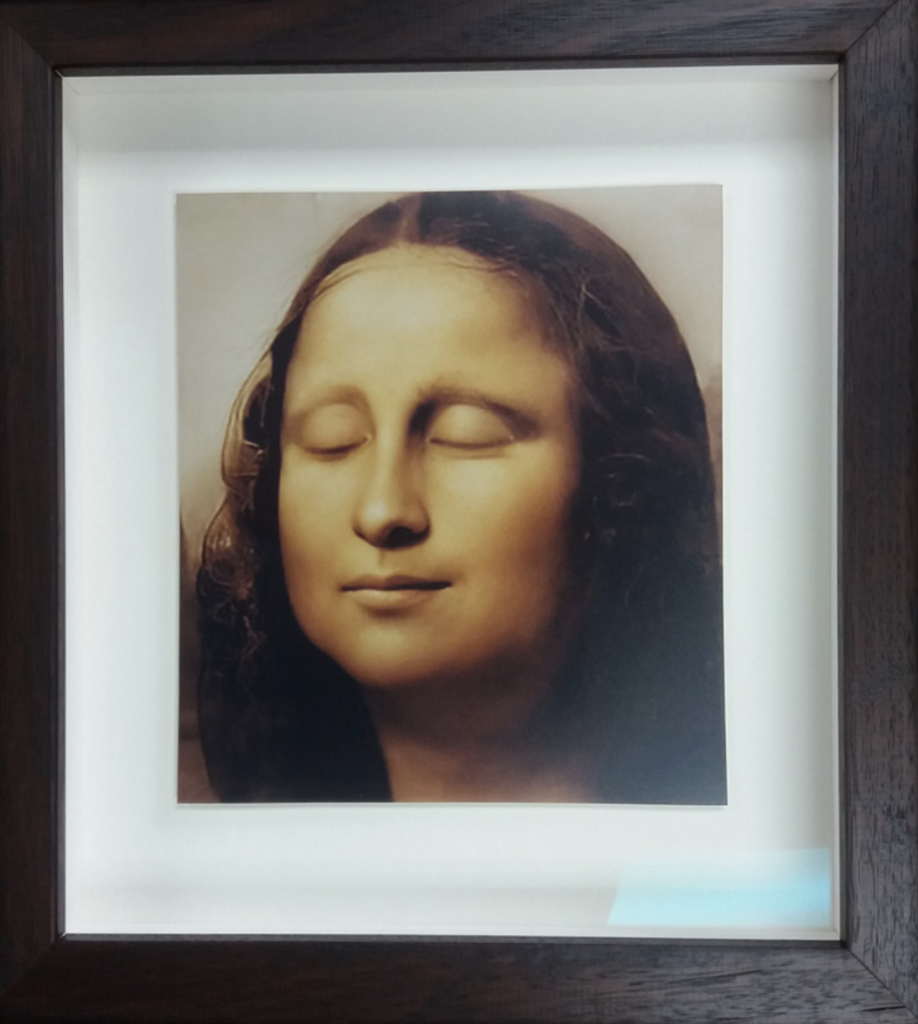
The work is conceived as a meme of peace and compassion that reverberates online, and as stamps and postcards.
Analogue and AI meet in the original work that Carapiet characterises as ‘the last photograph’ to call out the true significance of the emergence of AI.
Jon Carapiet’s contribution to modern photography lies in his consistent, multi-decade critique of the mechanisms of mass media and technology. From tabloids to television to AI, he has mapped the evolving sources of our shared visual language, forcing viewers to engage critically with the images that shape their world view. His work resonates deeply with the practices of appropriation artists like Richard Prince and Barbara Kruger, but he has developed a unique vernacular rooted in the specific anxieties and technological shifts of the last 30 years.
As an artist who embraces classical analogue photography as a “political stance” even while engaging with the digital frontier, Carapiet offers a bridge between historical photographic practices and the urgent issues of the present. His work in Legacy is particularly prescient, capturing the zeitgeist of an era grappling with the implications of AI on truth and representation. While he can be considered an outsider artist with limited commercial appeal, the critical relevance and intellectual rigour of his oeuvre is being recognised among art historians and critics. His sustained engagement with the integrity of the image and its relationship to power structures makes the work a useful contribution to understanding photography up to the time AI arrived to change everything.